Seasonal travel has a way of exposing the weak links in mobile plans. One month you’re fine at home, the next you’re paying ten dollars a day for roaming and rationing maps like it’s 2009. That gap created the demand for travel eSIMs, and the most interesting development recently is the rise of seasonal trial discounts. A few providers now let you try eSIM for free or for pennies, with small data bundles that prove coverage before you commit. Done right, these short tests save you headaches, especially when you’re bouncing between countries or moving across regions with mixed networks.
I’ve tested these offers in the US, the UK, and around Europe and Southeast Asia, both on personal trips and while helping teams field-test handsets. The trials are not all equal. Some give you a genuine preview of performance, others bury speed limits and short expiry windows. If you’re considering an international eSIM free trial, it pays to understand what you can and can’t validate in a few hundred megabytes, and how to pair a trial with a solid prepaid travel data plan.
What a trial eSIM actually proves
An eSIM trial plan is a small, time-boxed data package, typically 100 MB to 1 GB, valid from 24 hours up to 7 days. The point is to check whether your phone activates smoothly, what the real-world speeds look like in neighborhoods you care about, and whether the operator’s routing plays nice with your apps. Trials also help you confirm that your handset supports the right bands and that voicemail, hotspot, and 5G work as promised.
What this does not prove: consistency across a country, congestion handling at big events, or customer support quality during a crisis. A mobile eSIM trial offer can catch obvious problems early, but it’s still a snapshot. Treat it like a test drive around the block, not a cross-country shakedown.
Where free and near‑free trials show up
The offers are seasonal because providers fight for attention in summer and over major holidays. You’ll see a free eSIM activation trial bundled with discount codes and region-specific promos. Common formats include a truly free 100 to 200 MB bucket for 1 to 3 days, a $0.60 eSIM trial for 500 MB, or a free eSIM trial USA or free eSIM trial UK option limited to domestic coverage. Some global eSIM trial packages cover multiple countries with a shared allowance, helpful if your route threads several borders in a week.
Examples of timing: spring city-break season in Europe, late May through August for US summer travel, and late November through the New Year holidays. Providers also run “back to campus” discounts for international students, with a temporary eSIM plan that works for a few weeks before you pick a longer prepaid travel data plan.
Which devices and networks behave well
Modern iPhones from the XR onward handle digital SIM card activation gracefully, though older models may present confusing labels. Android is more variable. Google Pixel generally behaves, Samsung is reliable on S and Z series, while midrange devices can be picky about QR codes and roaming toggles. Always check your device’s eSIM compatibility by model number, not just brand. Dual-SIM behavior also matters. With a prepaid eSIM trial, most travelers keep their home SIM active for calls and texts, while pushing data to the eSIM. That split works well on iOS and recent Android builds. On older firmware, you may need to toggle “Allow Mobile Data Switching” or set the data SIM explicitly to avoid silent fallbacks to your home plan.
Network selection is another wrinkle. Many international eSIM free trial bundles piggyback on tier-two local operators, which sometimes means slower 5G rollouts or weaker rural roaming. That’s not always bad. Some second-tier networks give excellent city coverage at a lower wholesale rate, which is why trial eSIM for travellers can feel snappy in dense areas but fall off along highways. If your itinerary includes mountain towns or remote islands, treat the trial as a city test, then research local MVNO performance beyond your initial experience.
How to use a trial to avoid roaming charges
A trial is not just a marketing sample. It can be part of a careful migration away from expensive roaming without losing your home number’s reachability. The practical flow goes like this: install the trial eSIM a few days before departure while on Wi‑Fi, verify activation, then switch your data line over as you land. Keep voice and SMS on your home SIM to receive bank codes and calls, but ensure data roaming is disabled on that home line. With the trial running, test your essential apps in the airport or hotel lobby. Load two maps, request a ride, send a few photos, and run a short speed test. If you see stable pings and workable downlink, step up to a larger prepaid eSIM trial or directly to a short‑term eSIM plan for your stay.
The way you set this up can save meaningful money. A cheap data roaming alternative that delivers even 2 to 5 GB at a reasonable rate is often better than paying daily roaming fees that add up quickly on longer trips. If you plan to hop borders, a global eSIM trial validates that the multi-country package actually switches networks without manual APN fiddling. I’ve seen this go smoothly in the Schengen area and more unevenly moving between Vietnam and Cambodia, where manual network selection helps.
The small print that matters
Seasonal offers can look generous until you notice the constraints. It helps to read three lines closely: validity window, speed policy, and top-up pricing. Validity is often the first trap. A “seven-day” mobile data trial package might start the clock at activation, not first data use. If you scan the QR code at home to check compatibility, you might burn two days before your flight. Some providers now let you install the profile without activating until you land. If you can, choose that option.
Speed tiers vary. A free eSIM trial sometimes caps at 5 to 10 Mbps, which is fine for maps and messaging but not ideal for tethering. Since tethering is useful for laptops on short layovers, look for explicit hotspot allowance. A few prepaid eSIM trial offers quietly throttle tethering to 1 Mbps or block it. Lastly, top-ups. A gorgeous trial is pointless if the regular data costs spike above local rates. Check the step-up path: 3 to 5 GB packages, validity extensions, and whether top-ups keep your phone number labeling intact or install a new profile each time.
Use cases that benefit most from trials
Short stopovers are a natural fit. If you have a nine-hour layover in Heathrow, a free eSIM trial UK package with a few hundred megabytes covers WhatsApp, a train timetable, and a coffee shop hunt without buying a local SIM. Conference travel is another. Convention center networks can be saturated, even when hotels nearby are fine. A trial the day before lets you compare networks at the venue, then pick a short‑term eSIM plan with enough headroom for your demo or uploads.
Families and group trips also gain from a trial eSIM for travellers approach. One person runs the test on arrival, and if speeds are good in your area, others follow with the same provider to pool top-up codes or bundle discounts. Conversely, if the trial shows weak service in your specific neighborhood, you avoid rolling the whole group onto a bad choice. For digital nomads scoping a new city, a trial is the fastest way to check if the “5G” on the map translates to reliable video calls from your rental.
When a local physical SIM still wins
eSIMs shine for convenience, but I still carry a paperclip for a reason. In some markets, a local prepaid SIM with full-speed, high-capacity data beats any low‑cost eSIM data deal on price per gigabyte. If you plan to stream or hotspot heavily for a month, the math can favor a physical SIM. Also, some boutique MVNOs do not yet support eSIM or limit their eSIM activation to residents. If your trip includes long stays in one country with strong ID-friendly retail kiosks, buying in person could be smarter. Use the trial to bridge your first days, then switch if the economics and coverage justify it.
Seasonal timing and how providers think
Providers chase seasonal peaks to acquire customers at low cost, then hope to keep them for future trips. That’s why you see an eSIM free trial in late spring, followed by email nudges for summer bundles and a second wave around November. These campaigns often vary by region. An eSIM free trial USA might use a different partner network than a free eSIM trial UK, so your experience will shift. Retention deals sometimes include loyalty credit if you top up within a certain window after the trial. If you travel frequently, those loyalty points can offset a smaller monthly global plan used sporadically throughout the year.

Practical budgeting with trial data
The most common complaint with trials is burning through the allowance in minutes. That’s not a knock on the offer, it’s usually background syncing. Before you test, pause auto-updates for app stores, disable iCloud or Google Photos backup over cellular, and consider “Low Data Mode” for the trial period. If you want to test streaming, start with a short clip at SD resolution and make note of the bitrate in your streaming app if it shows stats. For navigation, download offline maps at home and use the trial to layer real-time traffic and search.
On average, a realistic test takes 150 to 300 MB. A ride-hail app session, a few photos sent, two speed tests, and some light browsing. If your trial is only 100 MB, do one speed test, not five, and save app updates for Wi‑Fi. This way you actually test the network rather than your phone’s background habits.
Security and privacy considerations
Switching to a new data provider means your traffic exits via a different set of gateways, sometimes in another country. That can affect which content libraries you see and whether your https://soulfultravelguy.com/article/esim-free-trial bank flags logins. Some trial eSIM plans use carrier-grade NAT and aggressive firewalling that break certain VPNs or port-dependent apps. If your work relies on a VPN, try it during the trial before committing. For app-based OTP, keep your home SIM active and reachable, or switch to authenticator apps that work offline. Public Wi‑Fi avoidance remains a good reason to use mobile data, but treat trial networks with the same caution you would any unfamiliar provider. If your phone supports it, enable DNS over HTTPS and keep OS updates current.
The soft factors: apps, support, and refunds
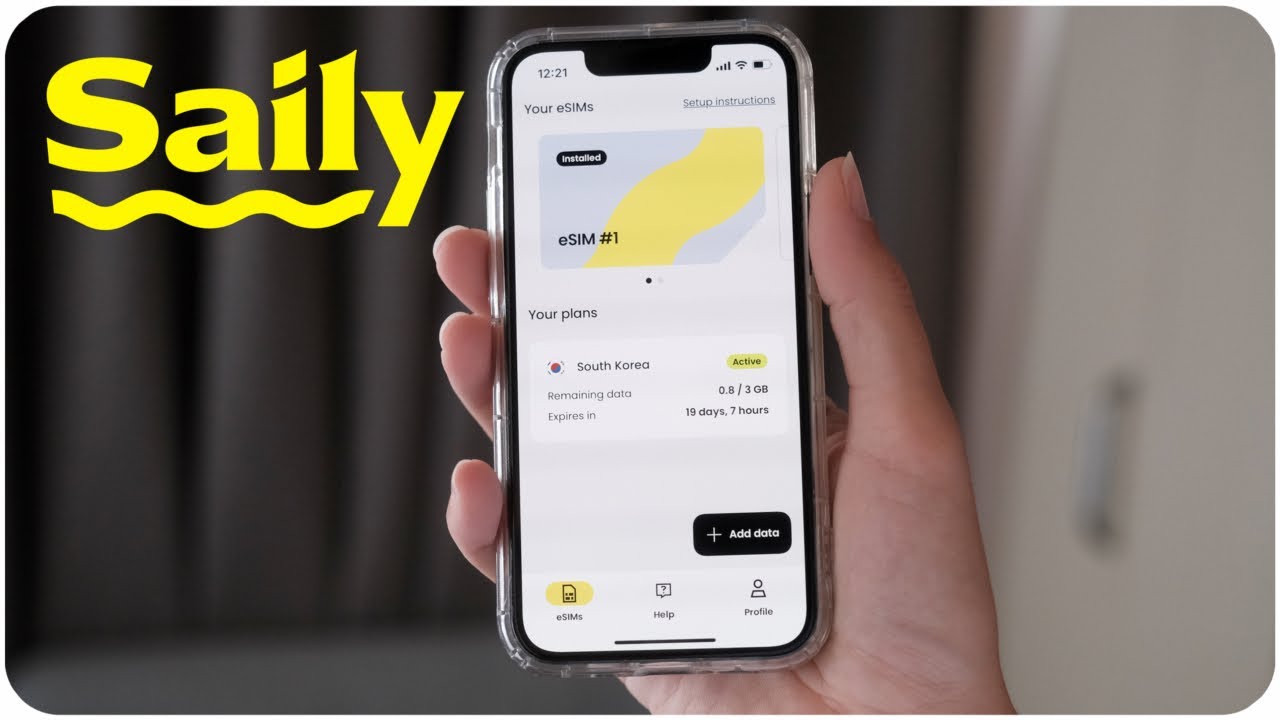
Trials expose more than radio performance. The best eSIM providers pair clean activation flows with transparent dashboards. You want an app that shows remaining data, expiry, supported networks, and an obvious “pause until arrival” switch. Activation help should include device-specific guidance, since the APN screens hide in different places across Android makes. Seasonal trial discounts sometimes outrun support teams, and wait times lengthen during holidays. If you’re leaving tomorrow, pick a provider with a functioning knowledge base and email support that responds within hours, not days. Refunds on a $0.60 trial are rare, but some providers will credit you if activation fails on compatible devices. Take screenshots during setup to speed that process.
How to stack trials with paid plans without chaos
It’s easy to end up with two or three eSIM profiles on your phone after testing. Keep labels clean. Rename each profile by country and provider, and archive or delete the ones you won’t use. On iOS, you can disable a line without deleting it. That helps if you plan a return trip within a month and want to keep a prepaid eSIM trial profile handy for reactivation. On Android, the toggle behavior varies by model, but the same principle applies. Consider using a single provider for multi-country trips once you’re satisfied with performance, since switching profiles mid-journey can invite activation friction when you’re tired and dependent on maps.
Typical price anchors to sense-check a deal
Seasonal promos shift, but there are predictable anchors. A credible eSIM $0.60 trial usually buys a few hundred megabytes for 24 to 72 hours. Full paid plans for a single European country often start around 3 to 5 GB for the price of two coffees, valid 7 to 15 days. Regional plans, such as all‑Europe or Pan‑Asia, carry a premium but simplify travel. If you see rates far above those anchors without clear benefits, you’re likely paying for branding. Conversely, if a plan seems too cheap, check speed caps and the fine print on throttling once you cross a small threshold.
A simple field test that mirrors real use
The goal of a trial is to simulate your actual day, not to chase a leaderboard speed. As a practical routine, I do three things within the first hour after landing: message home with a photo and short video clip to test upstream, pull a transit route with live updates to test latency, and hold a short video call in a busy area to see how the network handles congestion. If those three feel smooth, I’m comfortable buying a larger bundle. If one fails, I try a different network in the same spot, since coverage maps rarely capture ground truth at street level.
When global eSIMs make more sense than local ones
If your itinerary crosses three or more borders in a week, the overhead of multiple local SIMs becomes annoying. A global eSIM trial gives you one account and a single pane of glass to manage data across countries. Not all global plans are equal, though. Some share a common data pool but allocate different preferred networks per country, which is good for flexibility but can lead to mixed quality as you move. Others sell country add-ons that integrate cleanly with your base plan. Trials are crucial here because they reveal how seamless the handoff feels at the border. I’ve walked from Basel to Weil am Rhein and watched a good global eSIM switch within seconds, and I’ve also seen devices hang on a dead roaming partner for a full minute. Both experiences look the same on a marketing page.
Edge cases that trip people up
A few tricky situations keep repeating. New iPhones sold in the US ship without a physical SIM tray, which pushes you to eSIM for everything. If your home carrier has strict anti-fraud rules, adding and removing eSIMs repeatedly can occasionally trigger account security checks. Give yourself buffer time before a flight. Another case is dual profiles with the same number for iMessage and FaceTime. If you switch data lines mid-trip, Apple services can lag behind and try to verify over the wrong line. Toggle iMessage off and on after you settle on your travel data line to force a clean registration.
Car rental telematics also confuse some phones. Newer cars create Bluetooth and sometimes Wi‑Fi connections that interact with your handset’s route metrics. If your trial seems to hiccup only in a rental car, test outside the vehicle and verify that the car’s hotspot is disabled so your phone doesn’t stick to a weak signal.

A compact pre‑departure checklist
- Confirm your phone’s eSIM compatibility by exact model number, and update to the latest OS. Install the trial profile but delay activation until arrival, if the provider supports it. Disable auto-updates and cloud backups over cellular to preserve your trial allowance. Label SIMs clearly and set your home SIM to calls/texts only, with data off. Test your VPN, messaging apps, and tethering during the trial window.
Picking a provider that fits your travel pattern
No single provider wins everywhere. The best eSIM providers for you depend on route and habits. If you prioritize reliability in capitals and large cities, a provider with multiple roaming partners per country pays off. If you care about countryside coverage, look for explicit partnerships with the main incumbent networks. Tech support responsiveness matters more if you travel infrequently and need guidance each time. Price per gigabyte matters most on long trips where 10 to 20 GB of international mobile data is realistic. People who only need maps and messaging can live happily on a low‑cost eSIM data setup and top up in small increments.
Seasonal trial discounts create a low-risk way to find your match. Use them deliberately, compare speed, latency, and stability where you’ll actually be, and let that guide your purchase. When you assemble the pieces carefully, a prepaid eSIM trial becomes the gateway to a dependable short‑term eSIM plan that keeps you connected without surprise charges.
A few grounded scenarios
City hop in Europe for 10 days. Start with a global eSIM trial covering EU countries, test in your arrival city, then buy a 5 to 10 GB regional bundle if performance holds. Keep your home line for texts only. Expect average speeds between 30 and 150 Mbps in big cities, but treat anything above 25 Mbps as good enough for everyday use. If you see frequent packet loss during peak hours, consider a provider with a different partner network for your next stop.
Work trip to the US for a week. Grab an eSIM free trial USA option to validate coverage near the hotel and the office. Hotspot allowance matters if you present from a laptop. If the trial holds a 10 to 20 Mbps uplink in your venue, that’s adequate for video calls and document sync. Step up to a 10 GB plan, as US apps and map tiles tend to be data heavy.
Two weeks in the UK with countryside drives. A free eSIM trial UK package will look great in London. Before you commit, take a train out to a commuter town and run a quick test. If the provider leans on a network with patchy rural 4G, pick another partner or consider a local physical SIM for the rural leg. Many travelers only discover this after booking a remote cottage with barely a bar of service.
Southeast Asia backpacking route. Here a global eSIM trial validates cross-border switching more than raw speed. Expect widely varying performance between downtown districts and islands. Download offline maps in advance and carry a small top-up to cover ferries and night buses when Wi‑Fi vanishes.
The case for keeping one eSIM provider year‑round
After a few trips, inertia becomes your friend. Sticking with one provider means your device already trusts the app, knows the APN, and keeps old profiles for quick reactivation. Some providers reward this loyalty with periodic credits or discounted bundles, especially if you top up during seasonal promotions. Over time, you can maintain a baseline short plan and add country packs as needed, effectively building your own roaming system that follows your calendar rather than your carrier’s.
Final take
Seasonal trial discounts are more than marketing garnish. They let you try eSIM for free or close to it, prove the basics in the exact streets you’ll walk, and sidestep roaming charges that add up fast. The trials work best when you treat them as real diagnostics, not just a freebie. Watch the validity window, confirm tethering and VPN behavior, and test in the places that matter to you, not just in the airport. If the trial passes your personal test, step confidently into a prepaid travel data plan sized for your itinerary. If it fails, you’ve spent cents instead of days fighting a bad connection.
Used thoughtfully, these eSIM offers for abroad give travelers control. You choose the network, the price, and the timing. You keep your number reachable, your costs predictable, and your maps online the moment the plane door opens. That’s the quiet advantage of trial eSIMs: small commitments that turn into smooth trips.